

If you’ve ever owned a Subaru, you know it’s not just a car—it’s a partner for everything from daily commutes to backcountry adventures, built to handle whatever road or trail comes your way. For as long as I’ve been in the Subaru Tire Pressure Sensor supply business (we’ve been working with Subaru dealers and independent service shops for over a decade), I’ve heard firsthand how critical those small, unassuming tire pressure sensors are to keeping these vehicles running as they should. Most drivers know the basics: tire pressure sensors track air levels to prevent blowouts and improve fuel efficiency, but anyone who’s worked with Subaru-specific sensors knows they have unique features that set them apart from sensors for other brands, like the ones for the BMW 328i or Toyota RAV4. Let’s break down what makes a Subaru tire pressure sensor special, why those differences matter for Subaru owners, and why going with a Subaru-specific sensor (not a one-size-fits-all option) makes all the difference.
First, let’s talk about the core design that’s tailored exclusively to Subaru vehicles. Subaru’s lineup—from the Impreza to the Outback, Ascent, and Forester—has specific tire integration that’s not the same as BMW or Toyota. Early on, Subaru’s tire pressure monitoring system (TPMS) wasn’t just a add-on; it was calibrated to work with the brand’s symmetrical all-wheel drive, a signature feature that delivers power to all four wheels evenly. A generic TPMS sensor can’t sync with that AWD system’s speed sensors, which is why a BMW 328i Tire Pressure Sensor won’t work on a Subaru—their communication protocols are completely different. Our team at the Subaru tire pressure sensor supplier works directly with service technicians to make sure every sensor we produce is programmed to match Subaru’s exact CAN bus network, the system that lets the car’s computer talk to every component. This isn’t just about fitting physically; it’s about being able to transmit data directly to the dash display, so drivers get accurate, real-time pressure readings for each tire, not a generic alert. For example, Subaru’s dash shows individual tire pressures, not just a “low pressure” warning, and our sensors are calibrated to send that granular data. A lot of off-road Subaru owners love this—when they’re airing down their tires for dirt trails, they can check each tire’s pressure on the fly without guessing, which prevents over-deflating and damage to the sidewalls. That’s a feature you won’t get with a sensor designed for a Toyota RAV4, which has a different display setup and doesn’t integrate with off-road mode calibrations.
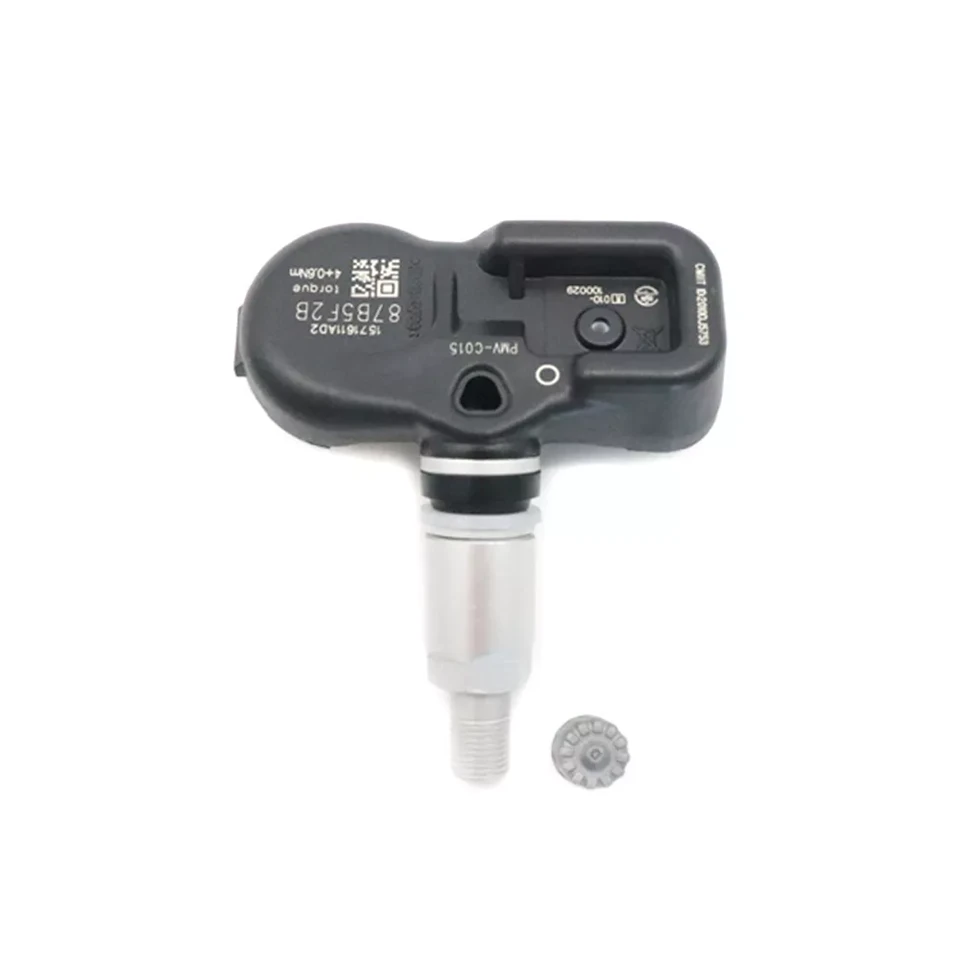

Next, the build quality is engineered to handle Subaru’s toughest conditions. Subarus are often driven in snowy mountain areas, muddy forest roads, and humid coastal climates—environments that beat up on car parts, especially the components mounted inside the wheel well. A standard tire pressure sensor might rust or fail after a few years, but Subaru-specific sensors have extra corrosion protection. We use a nickel-plated housing on all our Subaru tire pressure sensors, which stands up to road salt in winter, brine used on mountain roads, and debris from off-road driving. Also, the seals on our sensors are made with a high-grade EPDM rubber that’s resistant to extreme temperature swings—something critical for Subaru drivers who go from 30-degree below mountain winters to 100-degree summer highway drives without issues. I’ve seen too many drivers buy cheap replacement sensors online that fail after one winter, because they weren’t built to handle the corrosion from salt. A BMW Tire Pressure Sensor might work fine for someone who lives in a mild climate, but Subaru owners need something tough enough for their lifestyle, and our sensors are built exactly for that.
Another unique feature is the auto-relearn function, which is specific to Subaru TPMS. When you replace a tire pressure sensor, every car brand has a way to sync the new sensor to the car’s computer, but Subaru’s process is simpler and more reliable than many others. If you’ve ever tried to replace a BMW or Toyota sensor, you might have to use a specialized scan tool to manually input the sensor ID— but with Subaru, most newer models (2015 and up) have an auto-relearn feature that works with our sensors. That means once you install the sensor, drive the car at around 50 mph for 10 to 15 minutes, and the system automatically picks up the new sensor’s signal, no extra tools needed. This is a huge win for independent service shops and do-it-yourself Subaru owners. We get calls all the time from people who tried a generic sensor and couldn’t get it to sync, only to switch to our Subaru-specific sensor and have it working in minutes. This auto-relearn isn’t a random feature—it’s programmed into the sensor’s firmware exclusively for Subaru’s TPMS, which is why it’s not available on sensors made for other vehicles.
One thing that a lot of drivers don’t realize is that Subaru’s tire pressure sensors aren’t just for safety—they also impact vehicle warranty. If a driver’s TPMS is not functioning properly, Subaru won’t cover certain tire-related warranty claims, and that’s because the system is designed to detect slow leaks before they become a problem, which saves tires from premature wear. Our sensors are calibrated to detect leaks as small as 0.5 PSI per month, which is the exact threshold Subaru’s TPMS is set to. Generic sensors often have a higher detection threshold, which means a leak could go undetected for months, leading to uneven tire wear, reduced fuel efficiency, and even tire failure. We tested this a couple years ago with a customer who owned a 2018 Outback; he had a generic sensor that missed a slow leak, leading to a worn tire that needed to be replaced early. Once he switched to our Subaru Tire Pressure Sensor, he noticed the pressure alert popped up after two weeks, and he fixed the leak before it caused any major issues. That’s the kind of reliability you only get with a sensor made specifically for Subaru, not a one-size-fits-all option.
Now, if you’re in the market for a replacement sensor, you might be searching for terms like “Tire Pressure Monitoring System Sensor Replacement” and wondering where to start. We get it—there are a lot of options online, but not all are equal. When you choose a sensor that’s not made for Subaru, you risk compatibility issues, short lifespan, and even warranty problems for your car. Our team is here to make sure you get the right sensor for your Subaru, whether you have a Forester, Crosstrek, Ascent, or any other model. We also stock sensors for other popular makes, like the BMW 328i Tire Pressure Sensor and Toyota RAV4 Tire Pressure Sensor, so if you have multiple vehicles, you can get all your sensors from a trusted source. For service shops, we offer bulk pricing and fast shipping to keep your repair times low, and for DIYers, we provide installation guides tailored to each Subaru model to make the replacement process easy.
It’s also worth noting that Subaru’s TPMS has evolved over the years, and our sensors are updated to match every generation. For older Subarus (pre-2015), we produce sensors that work with the manual relearn process, which requires holding the reset button on the dash, and for newer models, we have the auto-relearn capability. That means no matter what year your Subaru is, we have a sensor that will work with its specific system. A lot of suppliers only make sensors for the latest models, but we’ve been supplying replacement sensors for older Subarus for years, so you can get a reliable sensor even for your 2010 Impreza that you don’t want to replace.
At the end of the day, the tire pressure sensor is a small part, but it plays a big role in keeping your Subaru safe, efficient, and ready for whatever you throw at it. The unique features—exclusive communication with Subaru’s AWD, corrosion-resistant build, auto-relearn function, and precise leak detection—make our Subaru tire pressure sensors stand out from sensors for other brands, and going with a brand-specific option is always the best choice. If you’re in need of a replacement sensor, whether for a Subaru or another vehicle, check out our pages for more details: Tire Pressure Monitoring System Sensor Replacement, Subaru Tire Pressure Sensor, BMW 328i Tire Pressure Sensor, Toyota Rav4 Tire Pressure Sensor, Bmw Tire Pressure Sensor Replacement. Our team is ready to help you find the right sensor for your needs, answer any questions you have, and work with you on bulk orders for your business. Don’t settle for a generic sensor that won’t hold up to your Subaru’s lifestyle—trust the supplier that knows Subarus inside and out.
References
- Subaru Corporation. (2022). TPMS Maintenance and Replacement Guide for Subaru Vehicles.
- National Highway Traffic Safety Administration (NHTSA). (2021). Tire Pressure Monitoring System (TPMS) Regulations and Vehicle-Specific Compatibility.
- Automotive Service Association (ASA). (2023). Best Practices for Tire Pressure Sensor Replacement in All-Wheel Drive Vehicles.
- Corrosion Protection for Automotive Sensors: Material Testing and Application Guidelines. (2020). Society of Automotive Engineers (SAE) International.
- Wireless Communication Protocols for Vehicle TPMS: Brand-Specific Calibrations. (2022). IEEE Transactions on Vehicular Technology.