

Honda tire pressure sensor safety features have one goal: catching under-inflation before it becomes a blowout. The system delivers low-pressure warnings, per-tire pressure readouts on direct systems, a malfunction indicator that flashes before it stays solid, and on many models a Tire Fill Assist signal that confirms each tire is properly inflated.
Every function behind that icon corresponds to a real failure chain: pressure drops, the tire flexes and heats, and the margin before a sidewall failure shrinks. The calls follow a pattern every first frost: a customer inflates all four tires, the light stays off for a week, then starts flashing for a minute every morning. That flashing, not the pressure, is what usually brings them to us. Knowing what the system is telling you turns that call into a two-minute fix.
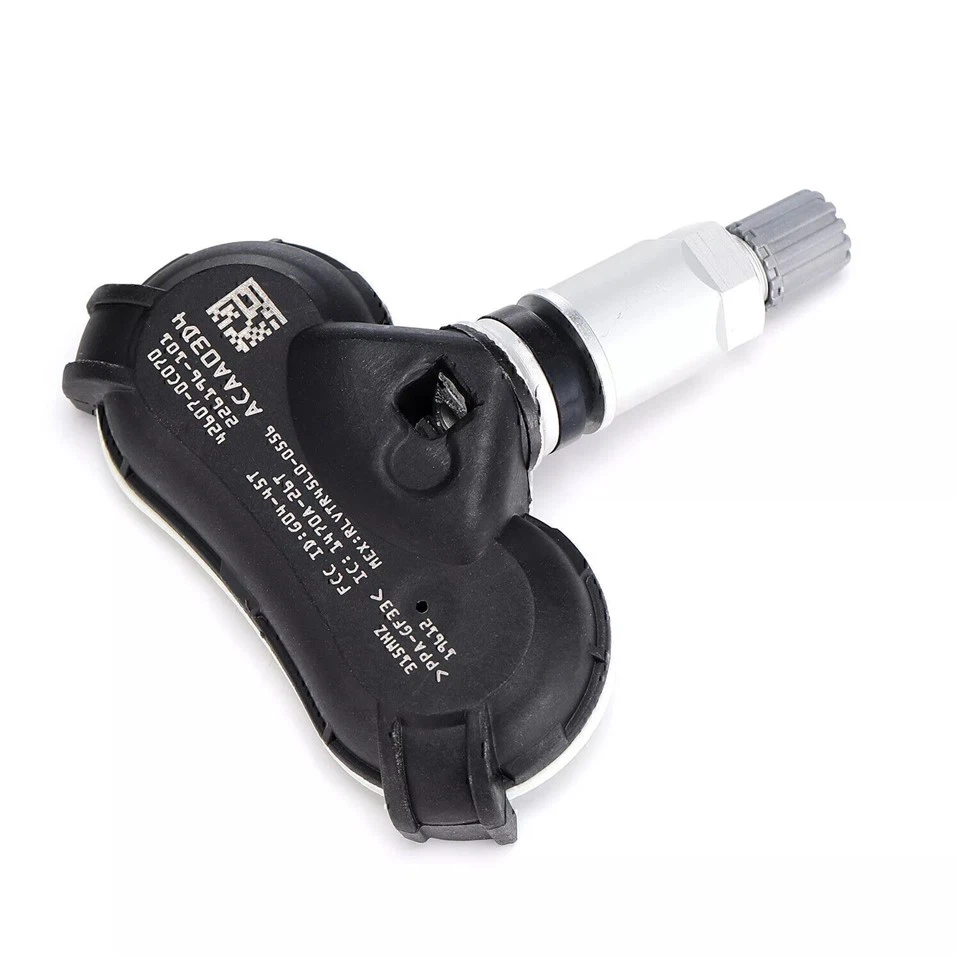
Quick Answer: The Safety Features of Honda's TPMS
Honda's TPMS combines four protections: a low-pressure warning light, per-tire pressure readouts on direct models, a malfunction indicator that flashes for about a minute and then stays solid, and Tire Fill Assist, which chimes when a tire reaches its correct pressure. None of it replaces a monthly pressure check.
Low Tire Pressure Warning: The Core Safety Function
The primary job is telling you a tire is badly under-inflated while you can still act. Federal standard FMVSS No. 138 requires US-market vehicles to warn the driver at roughly 25 percent below the placard value. Honda built both of its systems around that number.
The reason regulators care is physics: an under-inflated tire flexes more, flexing generates heat, and sustained heat breaks a tire down from the inside. Catching the drop early interrupts that chain.
Per-Tire Pressure Readout: Seeing Which Tire Is Low
On Hondas with direct TPMS, the instrument panel shows the pressure of each tire. That detail changes how fast you can act: a glance tells you whether the left rear is bleeding down or whether all four dropped together on a cold morning.
It also helps you judge urgency: a tire losing pressure week over week points to a slow puncture, while one tire far below the rest suggests a fast leak. Indirect systems, which estimate pressure from wheel speed data, cannot identify the specific tire, so the warning tells you to check all four yourself.
The TPMS Malfunction Indicator: Flashing vs. Solid Light
Honda's owner's manuals define two warning behaviors, and telling them apart saves a wasted service visit. A light that comes on and stays solid points to low pressure in one or more tires. A light that flashes for roughly one minute and then stays solid means the TPMS itself has a fault, or that non-original wheels or tires are fitted and the system can no longer monitor them correctly.
| Light Behavior | What It Means | What You Should Do |
|---|---|---|
| Solid from the moment you start driving | One or more tires is significantly under-inflated | Check all four cold and inflate to the door placard values |
| Flashes for about one minute, then stays solid | TPMS malfunction, or non-original wheels or tires are fitted | Have the system diagnosed; confirm the sensors match your model year |
| Per-tire readouts updating normally as you drive | The system is monitoring as designed (direct TPMS) | No action needed |
If the flashing pattern appears after new wheels or sensors were installed, our Honda Civic TPMS sensor reset guide walks through the relearn steps that clear it on most models.
Tire Fill Assist: Safer, Faster Inflation
Many Honda models include a feature that removes the guesswork at the gas station air pump. With Tire Fill Assist active, the car monitors pressure while you fill and signals with the horn and the hazard lights once a tire reaches its recommended pressure, exactly as official Honda owner resources describe. You can stand beside the wheel instead of walking back to the dashboard after each check. It is a small feature, but it makes hitting the placard pressure routine, and correct pressure is what every other safety function depends on.
How TPMS Supports Braking, Handling and Fuel Economy
The warning system protects more than the tire itself. A significantly under-inflated tire has a larger contact patch that flexes and squirms, which dulls steering response and lengthens braking distances, especially in wet conditions.
Rolling resistance also rises as pressure falls, so the engine burns more fuel to keep the same pace. None of these effects announces itself at moderate levels; the car simply feels less precise until you compare it against properly inflated tires. That is why the warning threshold exists: it catches a condition drivers tend to normalize.
What Honda TPMS Cannot Do
Honda's own manuals are direct about the limits: TPMS does not replace regular pressure checks, and the recommended practice remains a monthly gauge check on cold tires. The system also has blind spots worth knowing:
- It warns only after pressure has already fallen meaningfully; it does not prevent slow leaks from developing.
- It does not monitor the spare tire on most Honda models, so a flat spare stays flat until you find it.
- Indirect systems estimate pressure rather than measure it, and they can miss all four tires losing pressure equally, as during a gradual cold-snap drop.
- A dying sensor battery can look like a system fault rather than a tire problem.
When Safety Features Degrade: Aging Sensors and Battery Failure
Direct TPMS sensors are sealed units with non-replaceable batteries, and those batteries have a finite life, typically around seven to ten years of normal driving.
As one nears its end, the warning pattern changes: flashing episodes become more frequent, sometimes between otherwise normal readouts. That is the safety net thinning, not a random glitch. A sensor that reports nothing leaves that corner of the car unmonitored, and the low-pressure protection, the per-tire display and the malfunction indicator all lose their input.
When callers describe the flashing pattern repeating, replacing the sensor closes the gap. If new wheels are part of the plan, check whether a Honda TPMS sensor works with different tire sizes first. Our replacement Honda TPMS sensors are matched by model year and frequency, so the swap is the last step, not the start of another diagnosis.
Keeping Your Honda TPMS Working After Tire or Wheel Changes
Honda's manuals note that fitting non-original wheels and tires can prevent the TPMS from working correctly, and recommend having the system checked after any change. This is the compatibility question in disguise: sensors must match your model year and market frequency, stems must suit the new wheels, and the system may need a relearn. Work through those factors before buying parts, not after the light appears.
Frequently Asked Questions
Why does my Honda TPMS light flash then stay on?
That pattern is the malfunction indicator described in Honda's owner's manuals: the system has a fault, or non-original wheels or tires are fitted and cannot be monitored. It is not a low-pressure warning and will not clear by inflating tires.
Does Honda TPMS check the spare tire?
No. On most Honda models the spare tire has no sensor, so it sits outside the system. Check the spare on the same monthly schedule as the four mounted tires.
Can I drive with the TPMS light on?
If the light is solid, check all four tires first; if one is well below the placard value, inflate it or fit the spare. If it flashed and then stayed solid, the monitoring system is offline and you are driving without under-inflation protection until it is repaired.
How often should tire pressure be checked even with TPMS?
Once a month, when the tires are cold, with a gauge. TPMS watches thresholds and has blind spots; it is not the routine check Honda's manuals call for.
The Short Version Before You Order
- The system's protections are low-pressure warnings, per-tire readouts, a two-state malfunction indicator and Tire Fill Assist.
- A solid light means check your tires; a light that flashes for about a minute and then stays solid means the system needs attention.
- TPMS does not replace monthly cold-tire checks and does not monitor the spare tire on most models.
- Flashing episodes that grow more frequent usually point to an aging sensor battery, not a tire problem.
If the flashing keeps coming back, the sensor, not the tire, is the usual suspect. Match yours by year and market through our replacement TPMS sensors by vehicle model.