

In the realm of modern technology, sensors play a pivotal role in a wide array of applications, from automotive systems to industrial machinery and consumer electronics. As a sensor supplier, I often encounter inquiries about the differences between analog and digital sensors. Understanding these differences is crucial for making informed decisions when selecting the right sensor for a specific application. In this blog post, I will delve into the characteristics, advantages, and disadvantages of analog and digital sensors, and provide real - world examples to illustrate their use.
Analog Sensors
Analog sensors are devices that measure physical quantities and convert them into continuous electrical signals. These signals are proportional to the measured quantity, meaning that as the physical quantity changes, the electrical signal changes in a corresponding manner. For example, an analog temperature sensor might produce a voltage that varies linearly with temperature.
One of the key features of analog sensors is their simplicity. They typically consist of a sensing element and a signal - conditioning circuit. The sensing element interacts with the physical quantity being measured, and the signal - conditioning circuit amplifies and modifies the electrical signal to make it suitable for further processing.
The advantages of analog sensors are numerous. Firstly, they offer high resolution. Since they provide a continuous signal, they can detect very small changes in the measured quantity. This makes them ideal for applications where precision is critical, such as in scientific research and high - end manufacturing. Secondly, analog sensors are often more cost - effective than their digital counterparts. They have fewer components and simpler designs, which reduces production costs.
However, analog sensors also have some limitations. One of the main drawbacks is their susceptibility to noise. Electrical noise can interfere with the analog signal, causing inaccuracies in the measurement. Additionally, analog signals are more difficult to transmit over long distances compared to digital signals. As the signal travels, it can be attenuated and distorted, leading to loss of information.

An example of an analog sensor is the 1998 Honda Civic Map Sensor. This sensor measures the manifold absolute pressure (MAP) in the engine intake manifold. It converts the pressure into an analog voltage signal, which is then sent to the engine control unit (ECU). The ECU uses this information to calculate the appropriate amount of fuel to inject into the engine, based on the engine's load.
Digital Sensors
Digital sensors, on the other hand, measure physical quantities and convert them into discrete digital signals. These signals are represented by a series of binary digits (0s and 1s). Instead of providing a continuous range of values, digital sensors output a set of discrete values that correspond to different levels of the measured quantity.
Digital sensors typically include a sensing element, an analog - to - digital converter (ADC), and a digital interface. The sensing element measures the physical quantity and produces an analog signal, which is then converted into a digital signal by the ADC. The digital interface allows the sensor to communicate with other devices, such as microcontrollers or computers.
One of the major advantages of digital sensors is their immunity to noise. Since digital signals are represented by discrete values, they are less affected by electrical noise compared to analog signals. This makes digital sensors more reliable in noisy environments. Another benefit is their ease of integration with digital systems. Digital sensors can be directly connected to microcontrollers and other digital devices, without the need for complex signal - conditioning circuits.
However, digital sensors also have some disadvantages. They generally have lower resolution compared to analog sensors. The discrete nature of digital signals means that they can only represent a limited number of values, which may not be sufficient for applications that require high precision. Additionally, digital sensors are often more expensive than analog sensors due to the inclusion of an ADC and a digital interface.
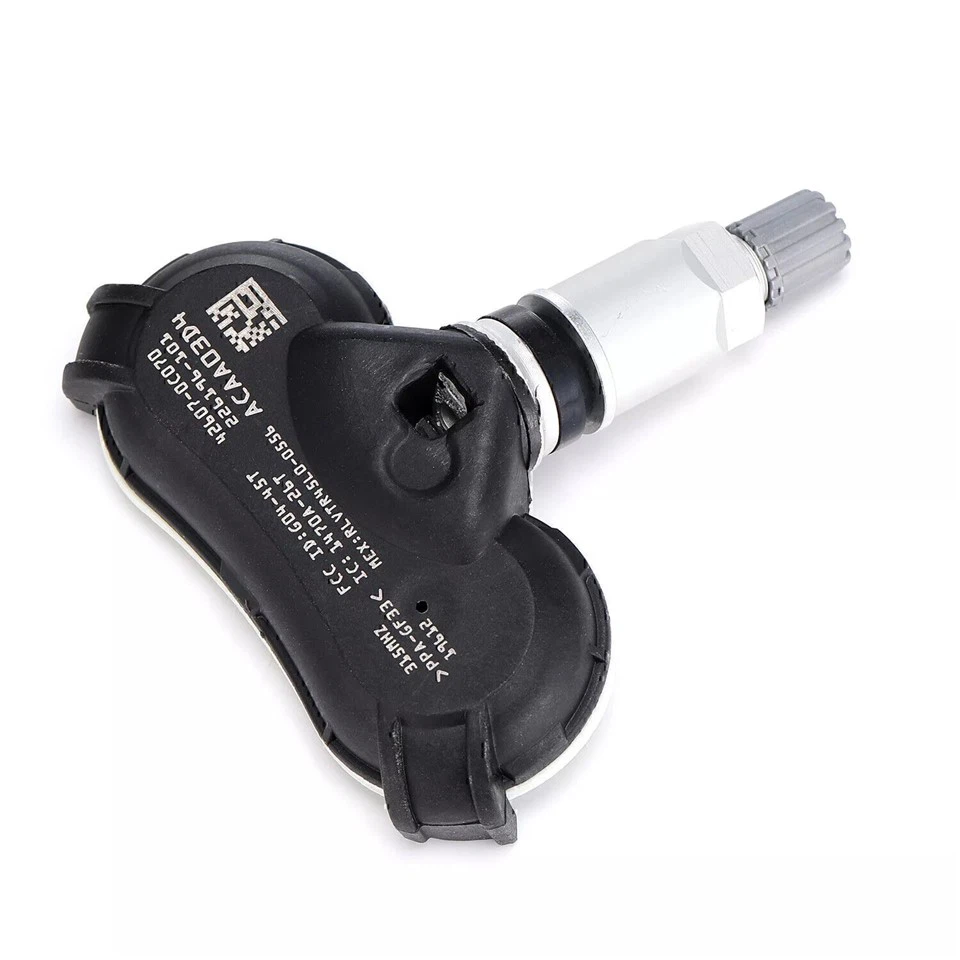
A well - known example of a digital sensor is the Subaru Forester Tire Pressure Sensor. This sensor measures the tire pressure and converts it into a digital signal. The signal is then transmitted wirelessly to the vehicle's onboard computer, which alerts the driver if the tire pressure is too low.
Comparison between Analog and Digital Sensors
When comparing analog and digital sensors, several factors need to be considered.
Signal Representation
As mentioned earlier, analog sensors provide a continuous signal, while digital sensors provide a discrete signal. The continuous nature of analog signals allows for a more detailed representation of the measured quantity, but it also makes them more vulnerable to noise. Digital signals, on the other hand, are more robust against noise but may lack the fine - grained detail of analog signals.
Accuracy and Resolution
Analog sensors generally offer higher resolution, which means they can detect smaller changes in the measured quantity. However, their accuracy can be affected by noise and signal distortion. Digital sensors have lower resolution but are more accurate in noisy environments due to their immunity to noise.
Cost
Analog sensors are usually more cost - effective because of their simpler design and fewer components. Digital sensors, with their ADCs and digital interfaces, are more expensive to manufacture.
Compatibility
Analog sensors require additional signal - conditioning circuits to interface with digital systems. Digital sensors, on the other hand, can be directly connected to digital devices, making them more compatible with modern digital technology.
Applications
The choice between analog and digital sensors depends on the specific requirements of the application.
In automotive applications, both analog and digital sensors are widely used. Analog sensors are often used for measuring engine parameters such as temperature, pressure, and position, where high resolution is required. Digital sensors, on the other hand, are commonly used for tire pressure monitoring, anti - lock braking systems (ABS), and airbag deployment, where reliability and compatibility with digital control systems are crucial.
In industrial applications, analog sensors are used for process control, where precise measurement of variables such as flow, level, and pH is necessary. Digital sensors are used for monitoring and automation, where they can be easily integrated with programmable logic controllers (PLCs) and other digital control systems.
In consumer electronics, digital sensors are becoming increasingly popular due to their small size, low power consumption, and ease of integration. For example, smartphones use digital sensors such as accelerometers, gyroscopes, and proximity sensors to provide a variety of features.
Maintenance and Replacement
Maintenance and replacement of sensors are important aspects of ensuring the proper functioning of a system. When it comes to analog sensors, calibration is often required to maintain accuracy. Over time, the performance of analog sensors can degrade due to factors such as temperature changes and component aging.
Digital sensors, on the other hand, are generally more reliable and require less maintenance. However, if a digital sensor fails, it may need to be replaced entirely. For example, if a Subaru Forester Tire Pressure Sensor malfunctions, it is typically replaced with a new sensor. If you need to replace a tire pressure sensor, you can refer to Replacing Tire Pressure Sensor for more information.
Conclusion
In conclusion, both analog and digital sensors have their own unique characteristics, advantages, and disadvantages. As a sensor supplier, I understand the importance of helping customers choose the right sensor for their specific applications. Whether it's a high - resolution analog sensor for precision measurement or a reliable digital sensor for integration with digital systems, we have a wide range of sensors to meet your needs.
If you are in the market for sensors, I encourage you to contact us for a detailed discussion about your requirements. Our team of experts can provide you with professional advice and help you select the most suitable sensors for your project. We are committed to providing high - quality sensors and excellent customer service.
References
- Dorf, R. C., & Bishop, R. H. (2016). Modern Control Systems. Pearson.
- Nise, N. S. (2011). Control Systems Engineering. Wiley.
- Rauch, H. E. (2011). Instrumentation, Measurement, and Feedback Control. Wiley.