

Hey there! As a sensor supplier, I'm super excited to dive into the world of force sensors and their applications in robotics. Force sensors are like the unsung heroes in the field of robotics, playing a crucial role in making robots more capable and intelligent.

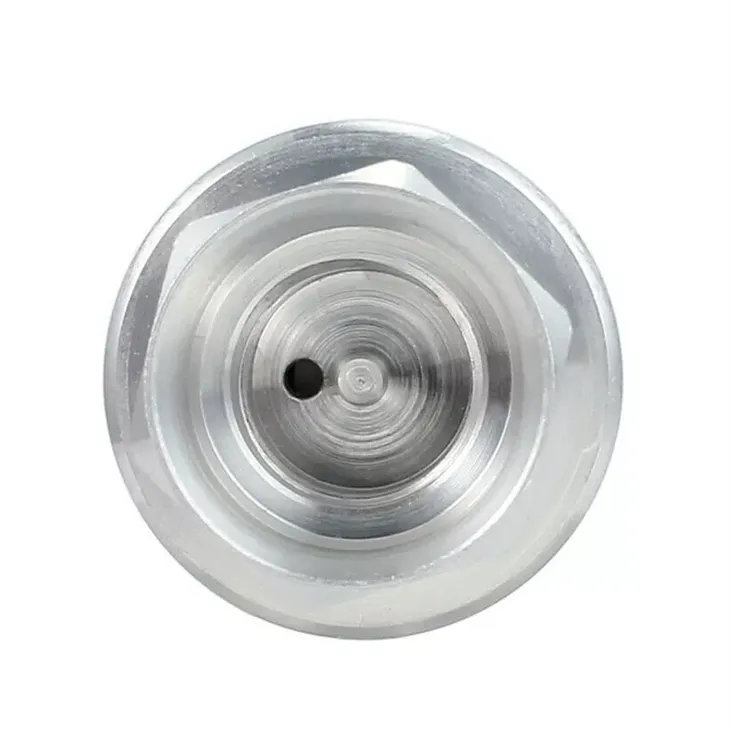
Let's start with the basics. A force sensor is a device that measures the force applied to it. It can convert the physical force into an electrical signal, which can then be processed by a robot's control system. There are different types of force sensors, such as strain - gauge sensors, piezoelectric sensors, and capacitive sensors, each with its own unique features and advantages.
One of the most common applications of force sensors in robotics is in robotic grasping. When a robot needs to pick up an object, it's essential to know how much force to apply. Too much force can damage the object, while too little force may cause the object to slip out of the robot's gripper. Force sensors can provide real - time feedback to the robot, allowing it to adjust the gripping force accordingly. For example, in a manufacturing environment, robots equipped with force sensors can handle delicate electronic components without causing any damage. They can sense the weight and texture of the component and apply the right amount of force to pick it up and place it accurately on the assembly line.
Another important application is in human - robot interaction. As robots are becoming more integrated into our daily lives, it's crucial for them to interact with humans safely. Force sensors can help robots detect when they are in contact with a human and how much force is being exerted. This is especially important in collaborative robots, or cobots, which work alongside humans in factories and other workplaces. For instance, if a cobot accidentally bumps into a human, the force sensor can immediately detect the impact and stop the robot's movement to prevent injury. It can also enable the robot to respond to gentle touches from humans, allowing for more natural and intuitive interaction.
In the field of robotic locomotion, force sensors are also invaluable. Robots that move on different terrains, such as legged robots, need to sense the forces acting on their legs to maintain balance and stability. Force sensors can measure the ground reaction forces, which are the forces exerted by the ground on the robot's feet. By analyzing these forces, the robot can adjust its gait and posture to walk or run smoothly. For example, a four - legged robot can use force sensors to detect uneven terrain and adapt its leg movements to avoid stumbling.
Force sensors are also used in robotic surgery. In minimally invasive surgeries, robots are used to perform precise operations with the help of small instruments. Force sensors can be integrated into these instruments to provide the surgeon with a sense of touch. This is known as haptic feedback. The surgeon can feel the resistance and texture of the tissues being operated on, which helps in making more accurate incisions and manipulations. It's like having an extra set of hands inside the patient's body, but with the precision and control of a robot.
Now, let's talk a bit about our sensor products. We offer a wide range of high - quality force sensors suitable for various robotic applications. Our sensors are known for their accuracy, reliability, and durability. Whether you're working on a small - scale research project or a large - scale industrial application, we have the right sensor for you.
If you're in the automotive industry, you might be interested in our Audi Air Conditioning Pressure Sensor. This sensor is designed to accurately measure the pressure in the air - conditioning system of Audi vehicles. It's a crucial component for ensuring the proper functioning of the air - conditioning system, which is an important part of the overall comfort and performance of the vehicle.
We also have the Air Conditioner Pressure Sensor, which is suitable for a wide range of air - conditioning systems. This sensor can help in monitoring and controlling the pressure in the system, ensuring efficient operation and preventing damage due to over - or under - pressure.
And for those who need a pressure switch for their air - conditioning system, our Air Conditioning Pressure Switch is a great option. It can automatically turn on or off the air - conditioning compressor based on the pressure in the system, providing reliable and safe operation.
If you're looking to integrate force sensors into your robotic projects, we're here to help. Our team of experts can provide you with technical support and guidance to ensure that you choose the right sensor for your specific application. We understand that every project is unique, and we're committed to providing customized solutions to meet your needs.
Whether you're a researcher, an engineer, or a manufacturer, we invite you to get in touch with us to discuss your sensor requirements. We can offer competitive pricing, fast delivery, and excellent after - sales service. So, don't hesitate to reach out and start a conversation with us. Let's work together to make your robotic projects even more successful!
References
- Siciliano, Bruno, and Oussama Khatib, eds. Springer Handbook of Robotics. Springer, 2008.
- Craig, John J. Introduction to Robotics: Mechanics and Control. Pearson, 2004.
- Spong, Mark W., Seth Hutchinson, and M. Vidyasagar. Robot Modeling and Control. Wiley, 2006.